




Sale!
Save ₹260
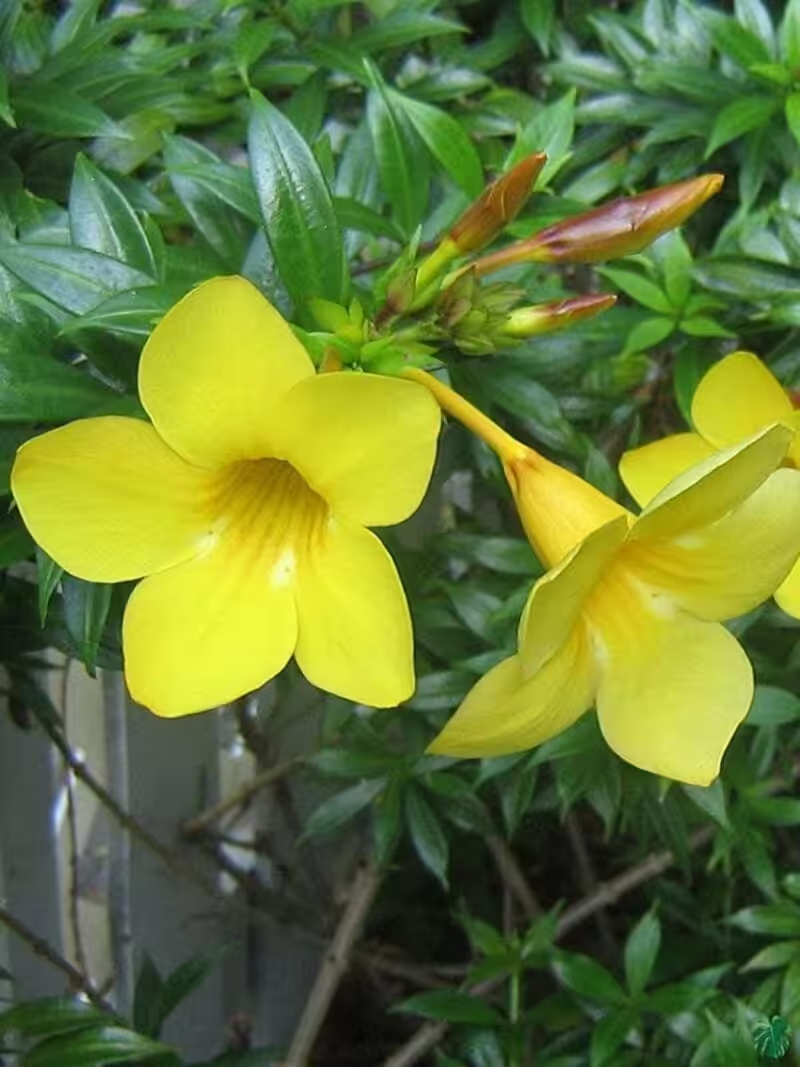
Allamanda Cathartica Yellow
Original price was: ₹650.₹390Current price is: ₹390.
PAN India Delivery
Dispatched Fresh & Fast
Arrives Healthy
In stock
Less than 19 items left!
What's Included
- Healthy plant (pot optional)
◦ Size: 8″ – 12″ tall (including pot) - Plant ships in a temporary pot or nursery bag
◦ Size: 11 cm (varies)
Product Details
- Known As: Allamanda Cathartica ‘Yellow’, Golden Trumpet, Yellow Allamanda, Common Trumpetvine, Bush Allamanda
- Growing Difficulty: Easy
- Light: Partial / Bright sunlight
- Water: Moderate
- Fragrance: No
Shipping & Delivery
Plants are shipped within 3 business days in their vegetative stage. It takes 1 to 7 days to deliver, depending on the location. Learn More
Replacement
We replace plants only if they arrive dead. If your plant dies in transit, just send us an unboxing video and photos — we'll send a free replacement right away. Learn More
Note
Plants are unique! The images are meant to give you an idea of the specification and quality of the plant you will receive, but will not be an exact replica — blooming depends on season and care.
Why you'll love this
The Allamanda Cathartica ‘Yellow’ produces glossy yellow, trumpet shaped flowers all year round. The flowers with green foliage look awesome!
Pairs well with

Allamanda cathartica yellow
Allamanda Cathartica ‘Yellow’, Golden Trumpet, adds colour and texture to your garden. It is a compact, evergreen climber and as shrub Allamanda grows very thick and get covered with yellow bell shaped 3 to 4 inches long blooms in growing season It is an ideal garden specimen for warmer climates and suitable for large pots, training over fences and arbours and growing as a standard. Choose a warm, sunny position, in moist, well drained soil. Keep this plant well watered in warmer months. Although it doesn’t have tendrils to climb but if you provide support it can grow as vine too.
Golden trumpet
Allamanda cathartica, commonly called golden trumpet, common trumpetvine, and yellow allamanda, is a species of flowering plant of the genus Allamanda in the family Apocynaceae. It is native to Brazil. This plant is cited in Flora Brasiliensis by Carl Friedrich Philipp von Martius.
Customer reviews
Customer reviews
Growing well
I received this plant with a few dried leaves but it is doing well now and hopefully will flower too. Thanks.
Wed Jun 18 2025 06:15:52 GMT+0000 (Coordinated Universal Time)
Waiting for the bloom
Hey!! We received this plant in good condition, we waited as suggested for over a week before we repotted, now we wait to see the Bloom and the plant to mature and grow. Thanks
Thu Jul 22 2021 04:49:24 GMT+0000 (Coordinated Universal Time)
Good condition
Leaves are sparse. Hope i get it back to its lush form
Tue Jul 16 2024 15:37:29 GMT+0000 (Coordinated Universal Time)